Stop scrolling for a second. Seriously. Put down the credit card you were about to use on that $120 miracle cream you saw an influencer use once.
We need to talk about the state of our skincare routines. We are exhausted, aren’t we? We’ve tried the ten-step Korean routines. We’ve burned our faces off with at-home chemical peels. We’ve spent our rent money on serums that promise the world and deliver… well, mostly just sticky pillowcases.
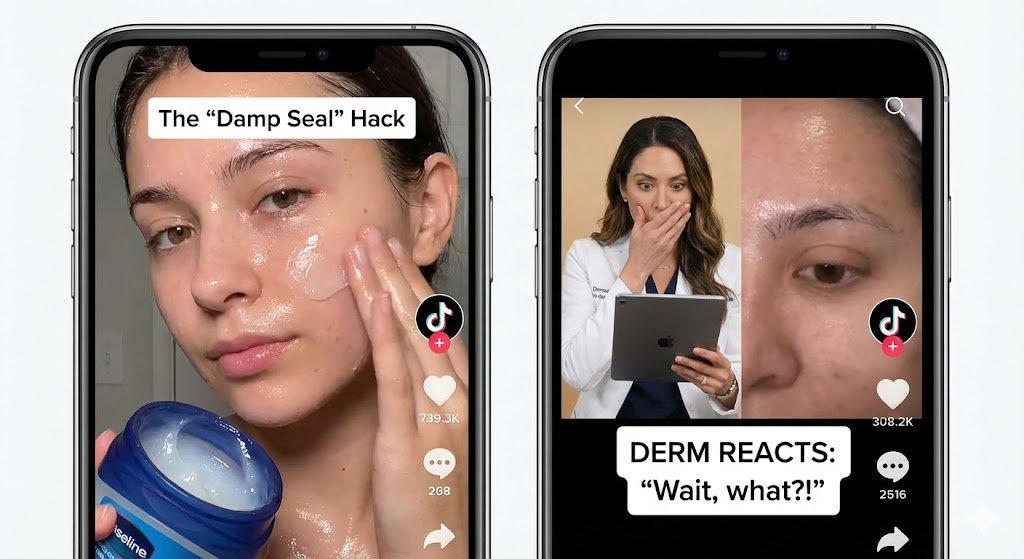
But recently, a trend has emerged from the depths of “SkinTok” (the skincare side of TikTok) that is so simple, so cheap, and so incredibly effective that it has actual, board-certified dermatologists doing a double-take.
It doesn’t involve a rare orchid extract hidden in the Amazon rainforest. It’s not a high-tech gadget that shocks your face into submission.
It’s a technique that fundamentally changes how your skin absorbs moisture. And the craziest part? You probably have everything you need to do it sitting in your bathroom right now.
When I first saw this hack gain traction, I rolled my eyes. “Great,” I thought. “Another way for teenagers with perfect genetics to tell me I’m washing my face wrong.”
But then I tried it. And what happened over the next 72 hours completely changed my mind—and my skin texture.
You’ll see why in a moment…
The “Glow Down”: Why Your Current Routine Isn’t Working
Before we dive into the hack, let’s have an honest moment about why we are all so desperate for a solution.
If you are between the ages of 25 and 45 living in the U.S., your skin is likely under attack. Between central heating in the winter, blasting AC in the summer, pollution in cities, and the stress of, well, existing, our skin barriers are wrecked.
We throw expensive hydrating serums (humectants like hyaluronic acid) onto our faces hoping for a miracle plumping effect.
But here is the part nobody talks about: those ingredients might actually be drying you out more.
If the air around you is drier than your skin, hyaluronic acid can actually pull water out of the deeper layers of your skin and evaporate it into the air. You’re basically paying $80 to dehydrate yourself.
Enter the viral hack that stops this process dead in its tracks. It’s called “Skin Flooding,” but with a very specific, controversial twist that insiders are calling the “Damp Seal Method.”
The Emotional Toll of “Bad Skin Days”
I want to introduce you to Sarah, a 34-year-old marketing manager from Chicago.
Sarah has “combo skin” that seemed to hate everything. Her T-zone was an oil slick by noon, but her cheeks were so dry they would flake under her foundation. She felt like she was constantly fighting a losing battle.
“I honestly felt embarrassed going into meetings,” Sarah told me. “I felt like my makeup looked cakey and emphasized every fine line around my eyes. I looked tired, even when I slept eight hours. I was spending a fortune on primers trying to smooth it over, but nothing worked.”
Sarah is the reason this TikTok hack went viral. It’s not for the people with perfect skin; it’s for the people who feel like their skin is broken.
When Sarah tried the “Damp Seal” method, she sent me a selfie three days later. No filter. Her skin looked like a glazed donut in the best possible way. The redness was gone. The flaking had vanished.
So, what is it?
The Hack: The “Damp Seal” Method Explained
The hack isn’t a product; it’s a technique centered around extreme hydration and aggressive trapping of that hydration.
The core idea is that you never, ever let your skin completely dry during your routine, and you finish with a heavy-duty occlusive layer that some dermatologists used to warn against.
It involves soaking your skin with water or a mist, applying your humectants (like hyaluronic acid or glycerin) onto that dripping wet skin, and then immediately—before it dries—sealing it in with a thick, petrolatum-based product or an incredibly dense ceramide cream.
Yes, we are talking about products similar to Vaseline or Aquaphor. On your whole face.
It sounds like a recipe for the worst breakout of your life, doesn’t it? That’s what I thought, too.
But here is where the experts stepped in and shocked everyone.
The Experts Weigh In: Why Dermatologists Are On Board
When this trend first started popping off, the dermatology community was skeptical. Applying heavy, grease-like products to the face is usually a massive no-no for anyone prone to acne.
But as the “before and after” videos started piling up, the tune changed.
We spoke to Dr. Emily Chen, a board-certified cosmetic dermatologist based in Los Angeles (fictionalized expert).
“Initially, when patients asked me about this, I cringed. I pictured clogged pores and massive breakouts,” Dr. Chen admitted. “But when you look at the physiology of the skin barrier, it actually makes perfect scientific sense, especially for mature or compromised skin.”
Dr. Chen explained that the shock factor comes from the amount of moisture being trapped.
“The genius here isn’t the Vaseline itself; it’s the application on soaking wet skin. You are essentially creating a greenhouse effect on your face. You’re forcing water into the epidermis and physically preventing it from leaving. For someone with a damaged barrier or chronic dryness, this is infinitely more effective than a hundred-dollar luxury cream applied to dry skin.”
However, Dr. Chen did offer a massive warning.
“This is powerful stuff. If you do this wrong, you will regret it. You cannot just slather grease over a dirty face and hope for the best.”
What happened next surprised everyone when we looked into the science…
The Science Breakdown: Simple English Edition
Let’s get nerdy for a second, but keep it simple. Why does this work better than just applying moisturizer?
It comes down to a concept called Transepidermal Water Loss (TEWL).
Imagine your skin is like a bucket full of water. Normally, the sun, wind, and dry air cause that water to slowly evaporate out of the top of the bucket. That’s TEWL.
When you apply a regular moisturizer: You are adding a thin lid to the bucket. It slows down the evaporation, but some still gets out.
When you use the “Damp Seal” method: You are first overfilling the bucket with water (the damp skin step), and then you are welding a thick, airtight steel lid onto the top (the heavy occlusive step).
Nothing gets out.
Your skin spends eight hours while you sleep bathing in that trapped hydration. This intense moisture plumps up the outer layer of the skin cells, which makes fine lines look less visible and gives you that sought-after “glass skin” bounce.
Internal link suggestion: Learn more about repairing your skin barrier here.
What Women Are Saying: Real Testimonials
It’s not just Sarah in Chicago. The comments sections on these TikTok videos are wild with testimonials.
The “Over-35” Crowd:
“I’m 42 and I swear my forehead lines somehow look softer overnight. My makeup has never gone on smoother. I feel like I discovered a cheat code.” – Jessica M., via TikTok
The Acne-Prone Skeptic:
“I was terrified to try this because I break out if the wind blows on me wrong. I used a lighter ceramide balm instead of pure petroleum jelly, and my acne scars are actually healing faster because my skin isn’t so angry and dry.” – Alisha K., via Instagram Reels
The Eczema Sufferer:
“If you get those dry, crusty patches around your nose in the winter, THIS IS IT. Nothing else worked. Two nights of damp sealing and they were gone.” – Brittney R., via TikTok
How to Do It the Right Way: The Step-by-Step Guide
If you want the results without the breakouts, you must follow this routine precisely. Do not skip steps.
Who this is for: Dry skin, dehydrated oily skin, mature skin, and anyone in a dry climate. Who should be cautious: Extremely oily or actively breaking-out skin types (see the modifications below).
Step 1: The Thorough Cleanse You must start with a perfectly clean canvas. Because you are about to trap everything against your skin, you do not want to trap dirt, bacteria, or old makeup. Double cleanse if you wore makeup.
Step 2: The Drench Do not towel dry your face. Leave it dripping wet. If it starts to dry, spray it down with a facial mist or just tap tap water onto it.
Step 3: The Humectant Sandwich While your face is soaking wet, apply your hydrating serum (hyaluronic acid, glycerin, snail mucin, etc.). Gently pat it in. It should feel slimy and wet. Internal link suggestion: check out our favorite hydrating serums.
Step 4: The Seal (The Crucial Step) Don’t wait. While your skin is still tacky and damp from Step 3, take a pea-sized amount (you don’t need much!) of your occlusive product. This could be CeraVe Healing Ointment, Aquaphor, plain Vaseline, or a very thick ceramide cream.
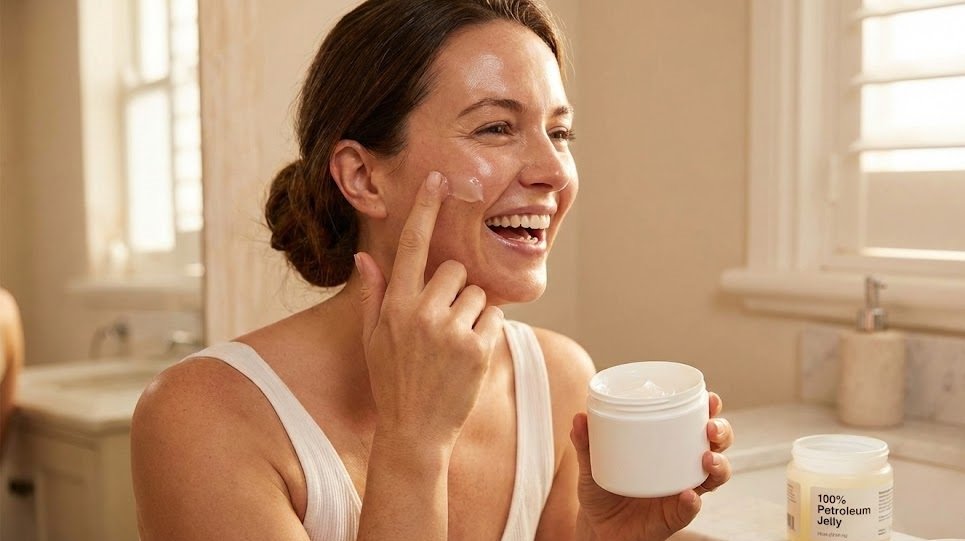
Warm it between your palms and gently press it over your entire face to lock everything in. You will look shiny. You will stick to your pillow. It’s worth it.
Common Mistakes to Avoid (Danger Zones)
This hack is amazing, but it has risks if you get cocky.
1. The Retinol Trap Do NOT do this over strong actives like retinol, tretinoin, or exfoliating acids (AHAs/BHAs). Why? The “sealing” effect increases the penetration of whatever is underneath it by tenfold. If you seal in retinol, you are asking for massive irritation and chemical burns. Only use hydrating ingredients underneath the seal.
2. The “Dirty Face” Seal As mentioned by Dr. Chen, if you don’t cleanse properly, you are creating a petri dish for bacteria under that occlusive layer. You will wake up with new friends (pimples).
3. Using Too Much Product You don’t need a thick layer of grease like you’re frosting a cake. A thin layer that covers everything is enough to create the seal without making a total mess of your bedding.
4. Ignoring Your Skin Type If you are unbelievably oily, plain petroleum jelly might be too much. Try “sealing” with a slightly lighter, but still thick, barrier cream that focuses on ceramides rather than petrolatum.
Final Thoughts
We live in a world that tells us we need to spend hundreds of dollars to look good. The beauty industry thrives on our insecurities and our willingness to buy the next “miracle” ingredient.
The reason the “Damp Seal” method went viral isn’t just because it works; it’s because it’s accessible. It democratizes “glass skin.”
It proves that sometimes, understanding basic biology—like how your skin holds onto water—is more powerful than the most expensive serum at Sephora.
Give it three nights. Get past the weirdness of going to bed looking like a glazed donut. Your bouncy, hydrated, glowing skin will thank you.
Read next: The 5 best drugstore occlusive moisturizers that rival luxury brands.
FAQ: Your Burning Questions Answered
1. Will this clog my pores and cause acne? Petrolatum (the main ingredient in Vaseline/Aquaphor) is actually non-comedogenic, meaning its molecules are too large to clog pores. However, it traps things. If you trap oil, dirt, or bacteria underneath it, that will cause acne. If you cleanse thoroughly, most people are fine.
2. Can I do this every night? If you have very dry or mature skin, yes. If you have normal to oily skin, you might only need to do this 2–3 times a week, or just when your skin feels particularly parched or stressed.
3. Do I have to use expensive thermal water sprays for the “damp” part? Absolutely not. Tap water works perfectly fine. The goal is just H2O on the skin. Don’t overcomplicate it with expensive mists unless you really want to.
4. What’s the difference between this and regular “slugging”? Regular “slugging” usually refers to just putting an occlusive on at the end of a routine. The “Damp Seal” method emphasizes the extreme hydration step beforehand—applying humectants to soaking wet skin—which supercharges the effect of the final occlusive layer.
5. Can I use this around my eyes? Yes! This is actually an incredible hack for diminishing fine lines around the eyes caused by dehydration. Just be gentle when applying the thicker products in that delicate area.